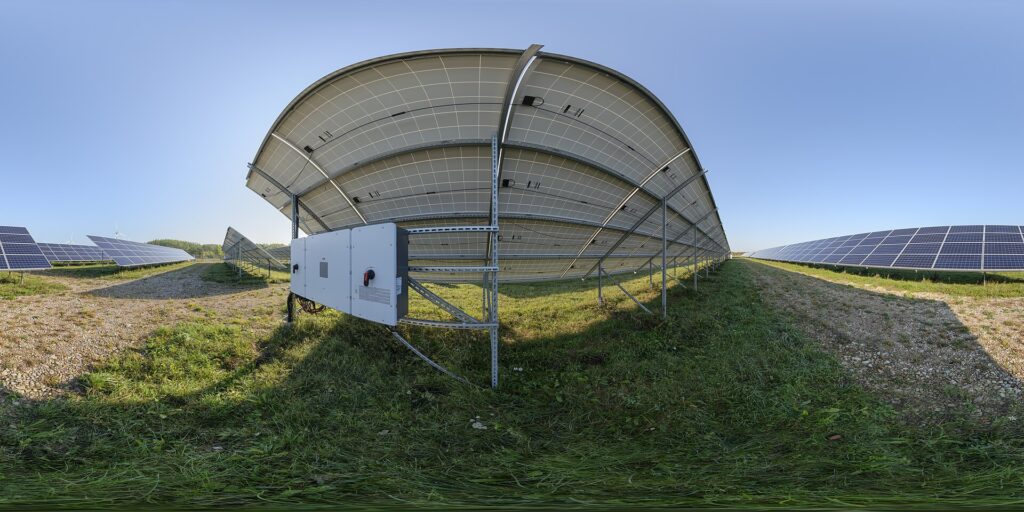
The inverter is the brain of a solar system. It converts DC from panels and batteries into AC, squeezes maximum power from the panels, protects line workers, and, in newer designs, helps keep the grid stable.
Types of inverters
| Type | How it works | Strengths | Trade offs |
|---|---|---|---|
| String inverter | One central unit for strings of panels | Lowest cost, easy to service | Shade on one panel can reduce the whole string |
| String inverter with optimizers | A DC optimizer on each panel feeds a central inverter | Panel level monitoring, less shade loss | More parts on the roof |
| Microinverters | A small inverter under every panel | Each panel independent, easy expansion, long warranties | Higher cost per watt |
| Hybrid inverter | Manages panels, battery and grid together | One box for solar plus storage, backup power | Battery compatibility must match |
| Off grid inverter charger | Makes AC from batteries and charges them from a generator | Runs homes and farms with no grid | Needs careful battery sizing |
| Central inverter | Very large units for solar farms | Lowest cost at utility scale | Single point of failure |
Key specifications explained
- Rated AC power: the maximum continuous output.
- DC to AC ratio: panels are often sized 10 to 30 percent above inverter capacity. A little output is clipped at noon, but more energy is made in mornings and evenings.
- MPPT inputs: separate trackers let you mix roof faces with different directions.
- Efficiency: modern inverters convert around 96 to 98.5 percent of DC to AC.
- Backup capability: whether it can power circuits during an outage, and how fast it switches.
- Surge rating: short term power for starting motors such as well pumps and air conditioners.
Grid codes and certification
Inverters must meet the grid rules where they are installed. In the United States and Canada that means standards such as IEEE 1547 and UL 1741 (including the SB supplement for grid support). Brazil requires INMETRO certification, Mexico follows CFE and CNE rules, and Chile requires SEC registered equipment. Always buy from the approved list for your utility.
Newer inverters provide grid support functions: they ride through brief voltage and frequency dips instead of tripping off, and adjust reactive power to steady voltage on busy feeders.
Grid forming inverters
Most inverters follow the grid. Grid forming inverters can create a stable voltage and frequency by themselves, much like a traditional power plant. They let solar and batteries run microgrids on islands and remote communities, and help big grids stay stable as coal and gas plants retire. Island grids in the Caribbean and Hawaii are early adopters.
Lifespan and maintenance
String and hybrid inverters typically last 10 to 15 years, so budget for one replacement over a system’s life. Microinverters often carry 25 year warranties. Keep inverters shaded and ventilated, check the app for fault codes, and have firmware kept up to date by your installer.
Choosing the right one
- Simple roof with no shade: a string inverter is usually the best value.
- Complex roof or partial shade: microinverters or optimizers.
- Want backup now or later: a hybrid inverter or a battery ready system.
- Remote farm or island home: an off grid inverter charger sized for your largest motor.
Discuss this topic
Have a question, a correction, or real world experience to share? Start the conversation below. Replies are reviewed before they appear.