Solar technology keeps improving every year. This page tracks the ideas moving from labs to rooftops, with an honest note on how close each one is. Share news you have seen in the discussion below.
Perovskite and tandem cells
Perovskites are crystal materials that absorb light very well and can be printed at low temperatures. Stacked on top of a silicon cell in a tandem, they capture blue light while the silicon captures red light. Certified lab tandem cells have passed 34 percent efficiency, well above the practical ceiling of about 29 percent for silicon alone, and the first commercial tandem panels began shipping in small volumes in 2024.
How close: early commercial. The main question is durability: perovskites can break down with heat, moisture and light, and buyers will want proof they last 25 years.
Back contact and next generation silicon
TOPCon cells became the mainstream in the mid 2020s. Heterojunction and back contact designs push efficiency higher by removing shading from front metal lines and reducing losses at the surfaces. Expect mainstream panels to keep creeping up by a fraction of a percent each year.
How close: available now.
Bifacial panels on trackers
Panels that collect light on both sides, mounted on trackers that follow the sun, are now the default for new solar farms in sunny parts of the Americas, from Texas to the Atacama.
How close: standard practice.
Floating solar
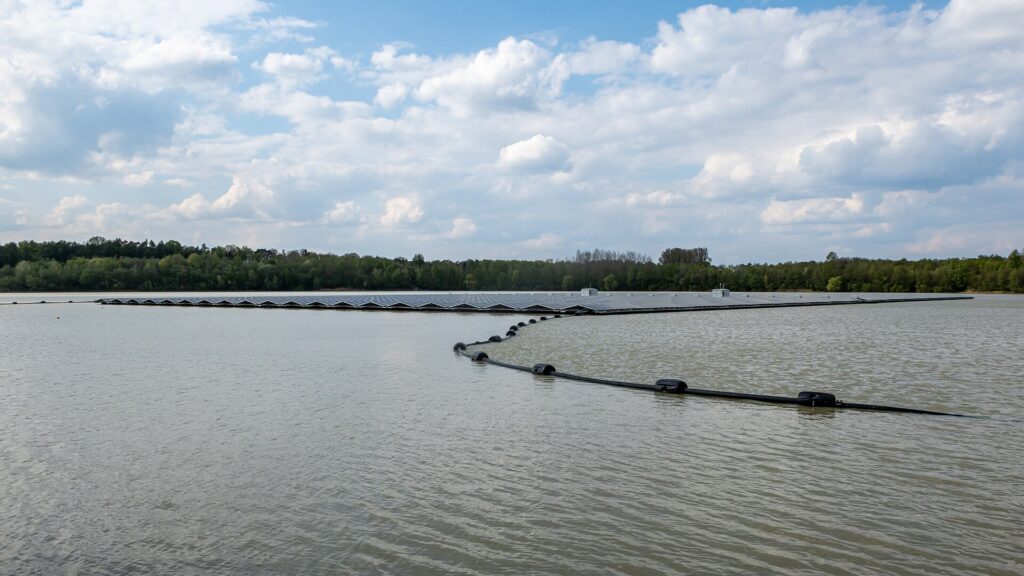
Panels on floats cover reservoirs, irrigation ponds and hydro dam lakes. Water keeps panels cool and the shade cuts evaporation. Brazil, Colombia and several U.S. states have floating projects, and pairing floating solar with existing hydro dams lets both share transmission lines.
How close: commercial, growing.
Building integrated solar
Solar roof tiles, facade panels, colored modules and semi transparent windows turn the building skin into a power plant. Costs are higher than standard panels, but they replace materials you would buy anyway.
How close: commercial for roofs and facades; solar windows are early stage.
Solar on transport and infrastructure
Solar is spreading onto canals, highway sound walls, parking lots, railway tracks and boats. California’s Project Nexus is testing panels over irrigation canals to save water and generate power.
Agrivoltaics
Designs that let crops and grazing share land with panels are moving from research plots to commercial farms. See Agrivoltaics.
Robotic installation and cleaning
Robots that lift and place panels on large solar farms are in early commercial use, which could ease labor shortages. Waterless cleaning robots are common in dusty deserts such as the Atacama.
Long duration storage
New batteries aim to store solar for days rather than hours. Iron air batteries, flow batteries, compressed air, thermal storage in sand or bricks and green hydrogen are all being tested at grid scale. See Energy Storage.
Space based solar power
Collecting sunlight in orbit and beaming it to Earth as microwaves has moved from science fiction to small demonstrations, including a Caltech experiment that beamed power in space in 2023.
How close: research. Cost and scale remain huge hurdles.
Recycling and circular design
With millions of panels reaching end of life by the 2030s, companies are developing ways to recover silver, silicon and glass at high purity, and designing panels that are easier to take apart.
Discuss this topic
Have a question, a correction, or real world experience to share? Start the conversation below. Replies are reviewed before they appear.