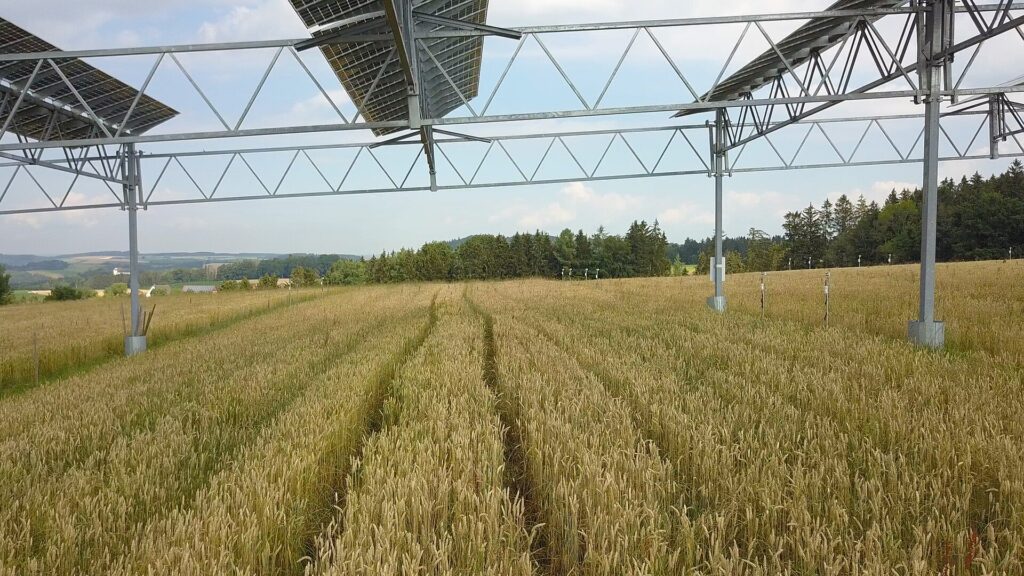
Agrivoltaics means producing solar power and food on the same land. Done well, the panels shade crops and animals from harsh sun, reduce water loss, and give the farm a second harvest: electricity.
Main types of agrivoltaic systems
- Solar grazing: sheep graze vegetation under standard solar farms, replacing mowing. The most common form in North America today.
- Raised arrays over crops: panels mounted high enough for people and equipment to work beneath, with space between rows for light.
- Vertical bifacial fences: panels standing upright in rows running north to south, catching morning and evening sun while tractors work between rows.
- Tracking agrivoltaics: panels tilt to give crops more light when they need it and more shade in the heat.
- Greenhouse and shade house solar: semi transparent panels or partial coverage over protected crops.
- Pollinator habitat: native flowering plants under panels that support bees and other insects that help nearby crops.
What grows well under panels
Crops that dislike intense sun or heat tend to do best: leafy greens, lettuce, spinach, kale, herbs, berries, tomatoes and peppers in hot regions, and forage grasses for grazing. Research at the University of Arizona found some crops under panels used less water and produced similar or higher yields in hot, dry conditions. Full sun crops such as corn usually lose yield under dense arrays.
In the tropics of Latin America and the Caribbean, shade tolerant crops like coffee and cacao, which traditionally grow under tree shade, are promising candidates being studied.
Livestock
- Sheep: the best fit. They do not chew wiring or climb panels, and their grazing keeps vegetation low.
- Cattle: need much taller, stronger mounts but provide shade that reduces heat stress, valuable in Texas, Brazil and Argentina.
- Poultry and bees: both work well with suitable designs.
- Goats: generally avoided because they climb and chew.
Real world examples
- Jack’s Solar Garden, Colorado: a community solar farm growing vegetables and running research beneath its panels.
- U.S. DOE InSPIRE project: a research network studying agrivoltaics at sites across the United States.
- Solar grazing across the U.S. and Canada: shepherds contract with solar farm owners to graze flocks, earning income from both lamb and vegetation management.
Planning an agrivoltaic project
- Pick the farming first. Decide what you will grow or graze, then design the array around it.
- Set height and spacing. Allow for equipment clearance, light needs and livestock.
- Plan water. Collect rain from panel edges for drip irrigation.
- Check zoning and farmland rules. Some places protect farmland or give tax treatment for dual use.
- Look for support. In the United States, USDA REAP can help with farm solar; see the incentives page and the AgriSolar Clearinghouse.
- Write it into the lease. If a developer builds on your land, put grazing or cropping rights, soil protection and restoration at the end into the contract.
Other solar uses on the farm
Solar water pumping, solar powered electric fences, cold storage for produce, grain drying and irrigation controls are proven, fast payback uses. For making fuel or fertilizer, see Green Hydrogen.
Discuss this topic
Have a question, a correction, or real world experience to share? Start the conversation below. Replies are reviewed before they appear.