Boats are a natural fit for solar: they sit in open sun all day and many travel at modest speeds on regular routes. Solar boats are already carrying passengers, fishing crews and supplies across the Americas.
How a solar boat works
Panels on the roof, canopy or deck charge a battery bank, which runs an electric motor. On sunny days the panels can power the motor directly and top up the battery. Most solar boats are designed for efficiency: light hulls, catamaran shapes and slow cruising speeds, since the energy needed rises steeply with speed.
Types of solar boats
- Solar ferries and water taxis: short, predictable routes make them ideal. They charge from panels and from shore power at the dock.
- River and community canoes: in the Ecuadorian Amazon, the Achuar community’s Kara Solar project runs solar powered canoes that replace costly gasoline outboards and connect remote villages.
- Tour boats: silent electric boats suit wildlife tours on lakes, rivers and protected bays.
- Fishing boats: small solar electric fishing boats cut fuel costs for artisanal fishers.
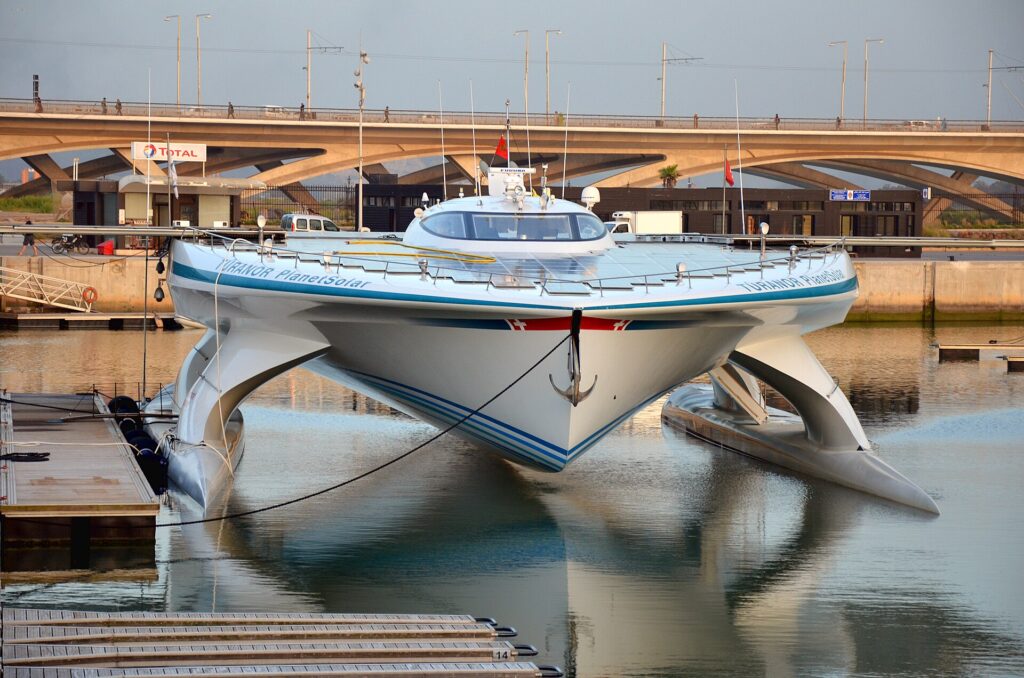
- Yachts and cruisers: solar electric catamarans can cross oceans. The PlanetSolar catamaran circled the globe on solar power alone between 2010 and 2012.
- Autonomous research vessels: uncrewed solar boats collect ocean data for months at a time.
Adding solar to an existing boat
Even on gasoline or diesel boats, panels can charge house batteries for lights, refrigeration and electronics, reducing generator time. Use marine rated panels, tinned copper wire, corrosion resistant fittings and a charge controller designed for boats. Flexible panels fit curved surfaces but tend to have shorter lives than rigid framed panels.
Sizing basics
A small, efficient electric boat may need only a few kilowatts of motor power at cruising speed. Each square meter of panel yields roughly 0.2 kW in full sun, so a canopy of 10 square meters gives about 2 kW. Match your route length, speed and battery capacity, and plan to charge at the dock on cloudy days.
Why it matters for the Americas
Island nations in the Caribbean, Amazon and Orinoco river communities, Andean lakes such as Titicaca, and coastal fishing towns all rely on expensive imported fuel. Solar boats cut costs, noise and spills, and keep water clean for the communities that depend on it.
Discuss this topic
Have a question, a correction, or real world experience to share? Start the conversation below. Replies are reviewed before they appear.