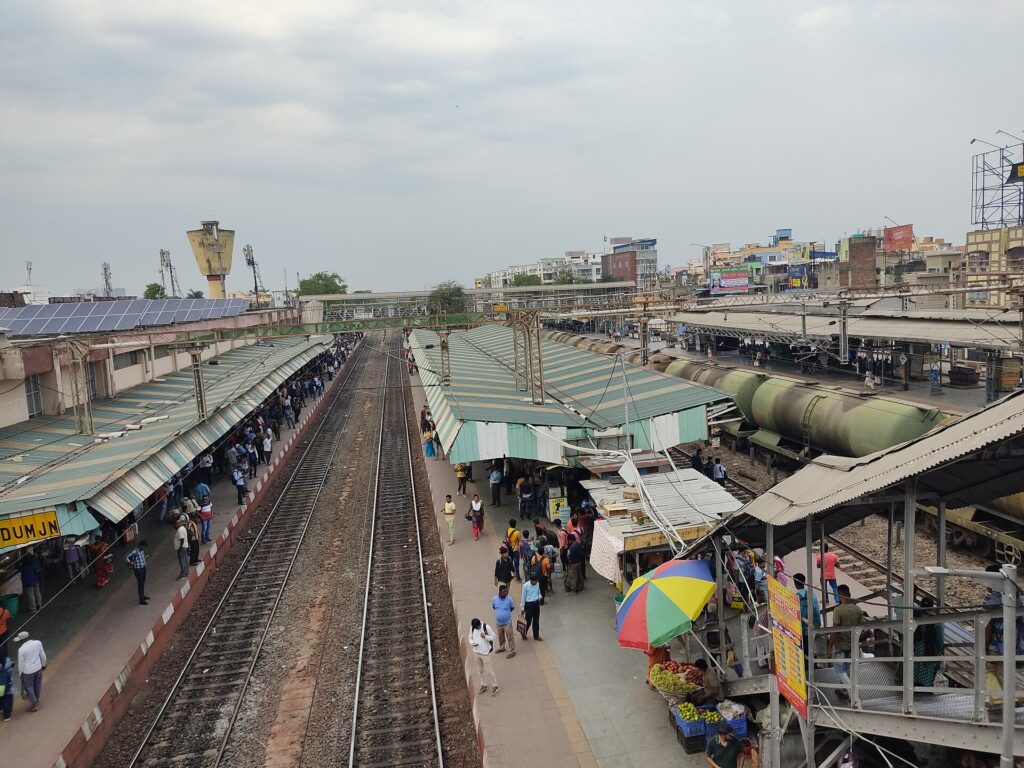
Railways own long, sunny strips of land and use large amounts of electricity. Putting solar on and beside the tracks is a growing idea, from panels laid between the rails to solar farms that feed trains directly.
Panels between the rails
The Swiss company Sun-Ways began testing removable solar panels laid between the rails of an active line in 2025. A special machine installs and removes the panels so track maintenance can continue. The approach uses land that already exists and needs no new clearing.
Challenges: vibration, dirt and debris from passing trains, snow clearing, track maintenance, safety approvals from rail authorities and theft prevention.
Solar farms that feed trains directly
In the United Kingdom, the Riding Sunbeams project connected a solar array directly to the traction power supply of an electric railway in 2019, one of the first of its kind. Direct connection avoids some grid costs and matches daytime solar with daytime train schedules.
Solar powered trains
In Byron Bay, Australia, a restored heritage train ran on solar panels on its roof and a battery charged by a solar array at the station starting in 2017. Short tourist or shuttle lines with frequent stops are the best candidates for this kind of train.
Stations, depots and rights of way
- Station roofs and platform canopies: the simplest option, widely used worldwide.
- Depots and maintenance yards: large roofs and ground space near high electricity use.
- Along the right of way: panels on embankments and noise barriers beside the tracks.
- Signals and crossings: solar with batteries has long powered remote signals, crossings and communications equipment across the Americas.
Opportunities in the Americas
Freight railroads in the United States, Canada, Mexico and Brazil run mostly on diesel today, so direct track solar has fewer electric trains to power. But railroads control vast rights of way that could host solar farms and transmission lines, and passenger systems that are electric, such as metros and commuter lines, are strong candidates for station and depot solar. Chile, Argentina and Brazil have electrified urban lines in very sunny regions.
Discuss this topic
Have a question, a correction, or real world experience to share? Start the conversation below. Replies are reviewed before they appear.