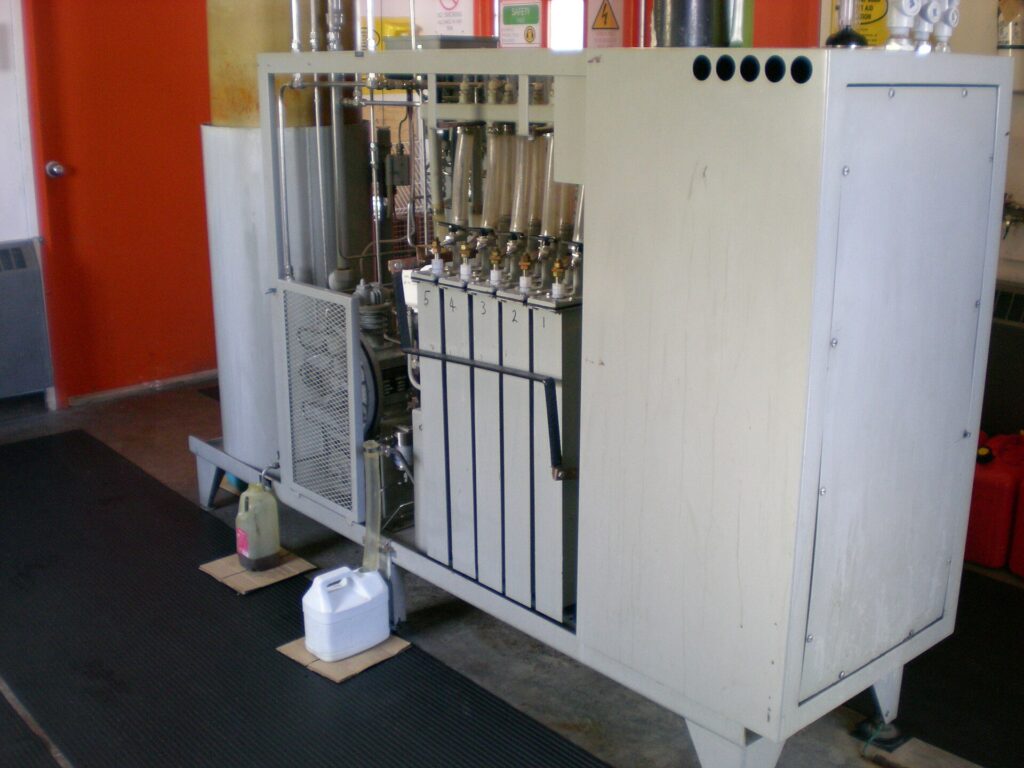
Hydrogen is the most abundant element in the universe, but on Earth it is locked inside water and other compounds. Solar electricity can split water to release it. The result, called green hydrogen, can be stored for months, burned or run through a fuel cell for power, used as a fuel for heavy vehicles, or combined with nitrogen from the air to make fertilizer. This page explains all of it, including what it really takes to make hydrogen on a farm.
How solar makes hydrogen
An electrolyzer passes electricity through water. At one electrode water splits into oxygen; at the other, hydrogen gas collects. Nothing burns and the only by products are oxygen and a little heat. When the electricity comes from solar, the hydrogen is essentially carbon free.
Types of electrolyzers
| Type | How it works | Fit with solar |
|---|---|---|
| Alkaline | Liquid potassium hydroxide electrolyte; proven for a century | Lowest cost; prefers steady power, so pair with a battery or grid |
| PEM (proton exchange membrane) | Solid polymer membrane; compact; high purity gas | Responds in seconds to changing sunlight; uses platinum group metals |
| AEM (anion exchange membrane) | Combines alkaline chemistry with a membrane | Promising for small, lower cost units; newer technology |
| Solid oxide | Runs at 700°C or more with steam | Most efficient when waste heat is available; industrial scale |
Making hydrogen on a farm
Farms have the three things hydrogen needs: sunny land for panels, water, and a real use for the product. Here is how a farm scale project comes together.
- Start with the use, not the hydrogen. Decide what you want: nitrogen fertilizer, fuel for tractors or trucks, backup power, heat for greenhouses or grain drying, or selling hydrogen to nearby users. The use decides the size, purity and storage you need.
- Size the solar array. Each kilogram needs about 50 to 60 kWh. A 100 kW array in a place with 5 peak sun hours makes roughly 146,000 kWh a year, enough for about 2,600 kg of hydrogen. Use the estimator below for your numbers.
- Secure clean water. Electrolyzers need very pure water. Well, rain or municipal water passes through filters and reverse osmosis or deionization first. Budget 10 to 15 liters of raw water per kg after purification losses. Harvesting rain from the solar panels themselves is a neat fit.
- Choose the electrolyzer. Small containerized PEM or AEM units from a few kilowatts up to a megawatt are sold for exactly this kind of project. A small battery can smooth passing clouds so the electrolyzer runs steadily.
- Compress and store. Hydrogen is very light, so it is compressed into steel or composite tanks, commonly 200 to 700 bar for vehicles and 30 to 350 bar for stationary storage. Other options include metal hydride canisters, which hold hydrogen at low pressure, or converting it into ammonia, which is far easier to store.
- Put it to work. See the uses below.
- Plan safety and permits. Follow hydrogen codes such as NFPA 2 and NFPA 55 in North America, with ventilation, leak detection, separation distances and trained staff. Talk with your fire department early.
- Find funding and partners. Universities, cooperatives and hydrogen hub programs look for farm pilots. Grants can make the difference between a demonstration and a working system.
What a farm can do with hydrogen
Make its own fertilizer
This is the most exciting farm use. Nitrogen fertilizer (ammonia and products made from it such as urea and ammonium nitrate) is normally made from natural gas in huge plants, and its price swings with gas prices. Ammonia can instead be made from green hydrogen plus nitrogen separated from air, using the Haber Bosch process. Each kilogram of hydrogen can make up to about 5.6 kg of ammonia, which contains roughly 4.6 kg of nitrogen.
The University of Minnesota’s West Central Research and Outreach Center in Morris has run a pilot that makes ammonia from renewable power, water and air to test this idea for Midwest farms. Small modular ammonia units are being developed so farms or cooperatives could produce fertilizer locally, protected from supply shocks.
Fuel tractors and equipment
Fuel cell tractors and trucks can refuel in minutes and work long days, which is hard for batteries in heavy field work. New Holland showed a hydrogen fuel cell tractor prototype as early as 2009, and several manufacturers are testing hydrogen and ammonia powered equipment. Commercial availability is still limited, so many farms today start with fuel cell forklifts, utility vehicles or backup generators.
Backup and off grid power
Batteries handle daily cycling best, but hydrogen can store summer sunshine for winter or for multi day outages, since tanks do not lose charge over time. A fuel cell turns it back into electricity at about 50 percent efficiency, with useful heat as a bonus.
Heat
Hydrogen can fuel boilers and burners for greenhouse heating and grain drying, or be blended with natural gas in some equipment. Check that equipment is rated for hydrogen.
Use the oxygen too
Electrolyzers release about 8 kg of oxygen for every kg of hydrogen. Fish farms and wastewater systems can use it to aerate water.
The honest economics
Hydrogen is not the cheapest way to store electricity. Turning solar power into hydrogen and back returns only about 30 to 40 percent of the energy, compared with about 90 percent for a lithium battery. For daily storage, batteries win. Hydrogen makes sense when you need long term storage, a fuel for heavy work, or a chemical such as fertilizer.
- Green hydrogen today generally costs several dollars per kilogram, more than hydrogen made from natural gas. The U.S. Department of Energy’s Hydrogen Shot aims to cut clean hydrogen to $1 per kg within a decade.
- Small electrolyzers cost more per kilowatt than large ones, which favors cooperative projects shared by several farms.
- Compression, storage tanks and safety systems can cost as much as the electrolyzer itself.
- In the United States, the clean hydrogen production credit (Section 45V) was kept only for projects that begin construction before January 1, 2028. Confirm current rules with a tax professional.
- Fertilizer is often the strongest case, because farms already buy nitrogen every season and prices have been volatile.
Hydrogen safety
- Hydrogen is 14 times lighter than air and rises and disperses quickly outdoors, which is a safety advantage over propane or gasoline vapors.
- It ignites easily over a wide range of mixtures, so leaks indoors are dangerous. Store and use it outdoors or in well ventilated, sensor equipped spaces.
- Hydrogen flames are almost invisible in daylight. Use flame detectors and thermal cameras.
- It has no smell, so odorants cannot be relied on for fuel cells; use electronic leak detectors.
- Ammonia is toxic if released. Ammonia systems need the same care farmers already use with anhydrous ammonia.
Green hydrogen across the Americas
Chile has a national green hydrogen strategy built on some of the world’s best solar in the Atacama and strong winds in Magallanes. Brazil, Colombia, Uruguay, Mexico, Canada and the United States are all developing projects, often aimed at fertilizer, mining, steel and shipping fuels. Farms that learn this technology now will be ready if costs fall as expected.
Discuss this topic
Have a question, a correction, or real world experience to share? Start the conversation below. Replies are reviewed before they appear.